Showing posts with label Dog health. Show all posts

Saturday, September 20, 2014

Stomach flu

Link feeling a bit under the weather.
 I've spent the better part of the early morning hours caring for Link. He woke me up at 2:30 a.m., standing by the door whining. I took him out, but he didn't do anything so we went inside again. He wasn't able to relax at all though, just pacing and whining. I thought it was hormones again, like earlier this summer, so I basically just ignored him and told him to be quiet.
One hour later he started vomiting. First came all the dog food he had eaten the night before and then came a big wad of grass and sticks that he probably ate while being off leash in the forest the previous evening. Then he wanted to go outside and what came out the other end wasn't exactly pretty. After that we fell asleep for a couple of hours before he started vomiting and had to go out again at 7 a.m. To say that I was tired at this point is an understatement.
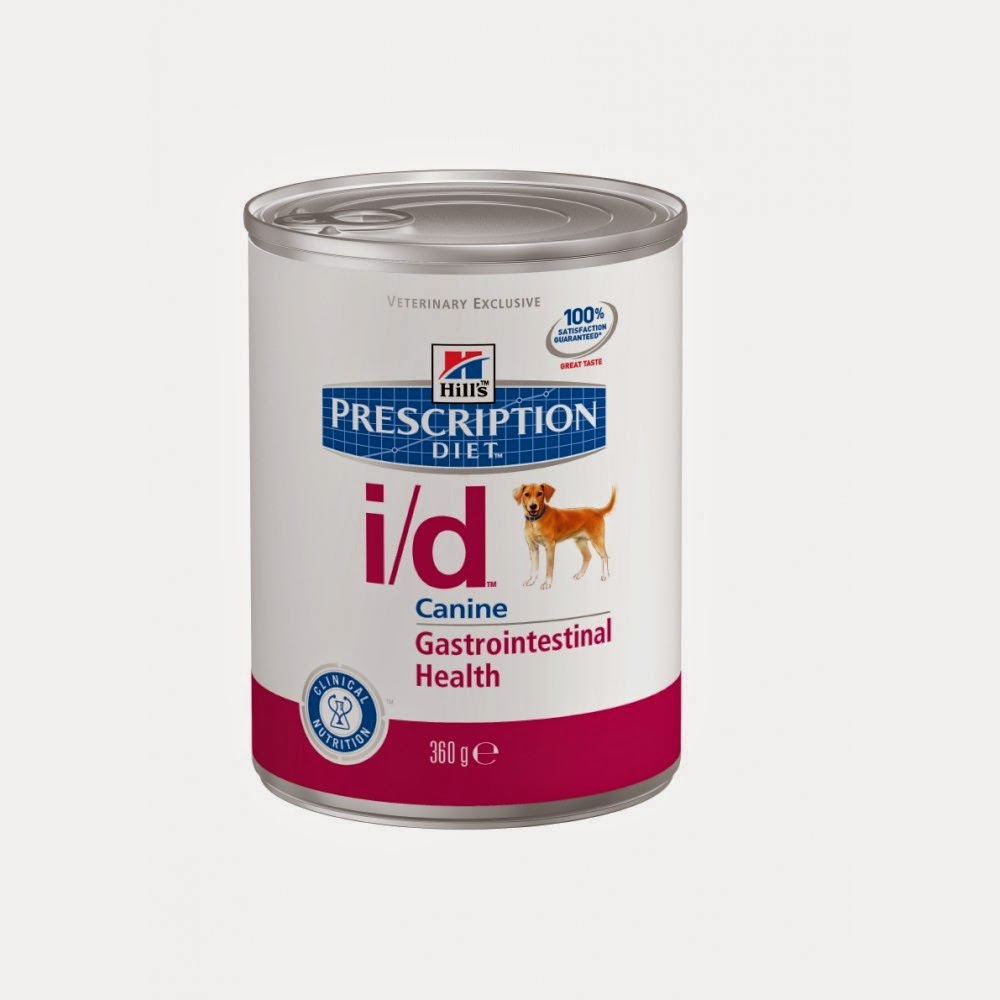
We are also taking care of my boyfriend's family's dog Scott, so I walked him too after Link was done, and gave Scott breakfast. Link has been on a strict 1-2 tablespoons of Hill's i/d canned dog food (canned food for sensitive stomachs) every other hour and a probiotic paste (called zoolac) every 6 hours since 4:30 this morning.
When he threw up at 7 a.m. I decided that if he did that again, I would have to go to the vet with him. I work at the vet, so I know not to wait to get your dog checked when it vomits. If it only has diarrhea, I'm not so worried, but vomiting can be caused of a number very serious conditions. Also since he had eaten a lot of grass I was afraid that some of that might have passed from the stomach to the intestines and gotten stuck. More than once have we had to surgically remove grass from the intestines of dogs that show the same signs as Link did this morning. When dogs eat a little grass it is not a problem, but when they eat a lot, it can get stuck and block the intestinal tract. This is fatal if not treated, so vomiting should always be taken very seriously.
Vomiting can also be caused by poisoning, and when that is the case, you have even less time to start treatment than when there is a blockage. Poisoning can either cause death directly, or indirectly by first causing organ failure, depending on what the dog is poisoned by.
Luckily for us, Link has not vomited any more, none of the canned food he has eaten has come back up. So either he ate something that he couldn't digest (well yes, the grass) or that he is sensitive to. Or he, like so many other dogs here in Tromsoe, has gotten the stomach flu that is going around right now. Often dogs will eat grass when they don't feel well, so that seems plausible.
While what comes out the other end can best be describes as a brown watery mush (Sorry for the vivid description!), Link seems to be in good shape and he wants to eat, so for now I'm not worried. Let's just hope what he has isn't contagious, since Scott is here.
Here's to hoping that Scott won't be waking us up tomorrow morning...

If you want to know more about what to do if your dog has the same symptoms, check out my blog post about that here.

A radiograph of the intestines of a dog with the stomach flu, after it had been given some contrast solution. In this case there was no blockage, as the contrast solution has passed through the system. This picture is from a previous post I've written about the stomach flu and you can read it by clicking here.

Sunday, August 31, 2014

Sunday mountain hike

When I woke up this morning, there was a thick fog outside. So I thought that I would spend some time working on stuff for the new YouTube channel (which you find here). After a couple of hours though, the fog cleared and the sun was shining from a clear blue sky, so I changed my mind and headed out to the island outside of Tromsø to hike to a mountain top with Link.

Link and the fantastic view on the way up.
Link thought it was way too hot to walk up any mountain, so just 30 minutes into the walk he simply stopped and lay down. It is important to listen to your dog in situations like this, they can easily overheat and heatstroke can kill. So my choice was to either let him rest and then go back to the car, or find another way for him to cool off.

Link refusing to walk...
Luckily there were several small lakes on the way up, so he had plenty of opportunities to get his temperature down.

Link doing what he loves most, bathing.
There were also several spots of snow when we got higher up on the mountain, and of course we also stopped there so Link could play, eat snow and cool off.

Link rolling in the snow.
 On the top of the mountain, it was rather windy, so keeping cool there was not a problem. Link and I both ate and I had some coffee. I have been up here twice before, and this was by far the time with the best weather conditions. It was actually nice to sit on the top, something that is usually too cold.

Link on the top, with Tromsø in the background.
Another really positive thing about the walk today is how nicely Link handled meeting other dogs during this hike. We met maybe ten dogs today, and Link was so much better than he has been before. I won't say he's perfect, but he has definitely improved.
So all in all it was a really nice day. Hope all of you have had a nice weekend!


Wednesday, August 27, 2014

A very good day!

Yesterday was a fantastic day! Not only was it my birthday and wonderful weather, Link was given a clean bill of health by the vet after a couple of weeks with an ear infection.

Link waiting outside with me after work. Wonderful weather on a wonderful day!

 Another reason why this is a good day is that Link has done a good deed today. He donated blood to a injured dog that needed serum! 

Link got a band aid on his leg where they draw his blood.
But back to Links ear. He has had a mild ear infection that turned into a ugly inflammation after 2 weeks of treatment. We had been able to cure the infection but for some still unknown reason, the inflammation got worse and wouldn't go away. So one week ago we put him on cortisone and when I had him checked by the vet today, everything looked really good! So now we're going to gradually decrease the dose of cortisone and in about 1,5 weeks time he will hopefully not need any more medication. 
Link was rather tired after a long day at work...
 Another good news is that I finally got the blog's youtube channel up and running. So far I've only gotten the video that I made about Link's first year uploaded, but I promise there is more to come. The plan is to start making dog training tutorials. Hope you guys will like it!

The channel is called Dogtelligent and you can watch the video here.


Sunday, August 24, 2014

Physical therapy for my Golden Retriever

Before we went on vacation in the end of June, Link had an appointment with the physical therapist at work. She analyzed how he walked and moved, how he reacted to pressure on different parts of the back and bent and stretched legs and neck. She found that even though he had very symmetrical muscles (which made me really happy, since that means I've been doing a good job when it comes to the rehabilitation after the surgery. Read more about that here), he is a bit stiff in the back behind the ribs.
So when I came back from the vacation, Link was put on an anti-inflammatory/analgesic drug and he got an appointment to her three weeks ago. During the first session she also found that he was really stiff in the neck and has a slight problem balancing his hind body when leaning forward. She showed us some exercises that we were supposed to do daily until his next appointment one week later.

I decided to use the clicker as a marker to tell Link when he did the right thing, but I didn't technically use proper clicker training as I lured Link into position with a treat (but which he of course didn't get until I clicked). The advantage of using a clicker instead of my voice is that it is much more precise. In addition, Link knows when I start clicking that he get rewarded for trying things, so teaching him the basics in how to stretch was done in less than 10 clicks.

After Link's second session with the physical therapist, she told us that he was better and that the next time I should be with them during the massage so that I can learn how to do it myself at home. 

We have now kept on doing the exercises for another week and a half, and hopefully next week we will get an appointment with her again. Looking forward to learning something new!

 Below are some pictures from the first day we trained how to stretch. The pictures are in really poor quality because they are snapshots of videos, but at least you get an idea of what we are doing.

The rolled up yoga mat is there to give Link a barrier that he should keep his hind paws behind while leaning forward. He is supposed to have his head and back in a straight line, so this isn't perfect, but at least you can see what we are trying to do. 


Streching the neck forward/down.

Stretching the neck upward/back.

Stretching the neck to the left and to the right.

Saturday, August 9, 2014

Dogsitting the neighbour's Bichon Havanais

Daisy wearing her cone collar, also known as Elizabethan collar. She is a Bichon Havanais with "wrong" type of coat. I think she is prettier than the dogs with correct coat.
 This evening we are dogsitting our neighbour's Bichon Havanais Daisy. She had surgery on her eye 2 days ago, so when her owner had to leave her for a few hours tonight, I said I could watch her. She is wearing a cone collar to keep her from scratching her eye. She is used to the collar by now, because this is the second time she has had this surgery (but last time it was the other eye). She had a condition called Cherry eye, for which the treatment most often is surgery.

Going for a walk.

We went for a walk down to the store where my boyfriend used to work. I waited outside with the dogs, while Mads went in to the store. Being the dog lover that he is, of course he bought treats for the dogs too.

Both dogs waiting to get treats.

 Link and I have been attending a gun dog course all day, so Link is exhausted. To keep Daisy from trying to get him to play all the time, I had to let Link into our bedroom and up in the bed where Daisy can't get to him. Poor Link, too tired to play, but too much of a gentleman to say no to Daisy's play invites.

Link and Daisy while we waited outside of the store.

Tomorrow Link and I are going to attend the second day of the gun dog course. I can't wait, it is so much fun! Even though we are among the least experienced participants of the course and have hardly impressed anyone today. We have a lot to work on, to put it that way. I will tell you guys more about it tomorrow. Hope you have a lovely weekend!

Tuesday, August 5, 2014

Miniature Schnauzer

A Miniature Schnauzer I saw at a dog show in Harstad a few years back.

The Miniature Schnauzer was originally bred from Standard Schnauzers mixed with Affenpinscher and poodle. The purpose of this mixing was to get a small dog that could double as both guard/herding dog and ratter.

Last year (2013) it was the 17th most popular breed of dog in the US. And it is easy to understand its popularity! It is a quick, happy and relatively easily trained dog with a practical size. But it might not be the first choice if you are living in an apartment building, since being a guard dog it can be quite vocal.


A "friend", an Affenpinscher I brought home one day when he had gotten lost. I called the owner and they were happy to see each other again. This is one of the breeds that was in the mix when the Miniature Schnauzer was created.
One thing to be aware of when getting a Miniature Schnauzer is that their coat needs regular grooming. This can be rather time consuming, or expensive, since to get a proper "Schnauzer cut", you are likely to need a professional handle it. The coat of the Schnauzer should not be clipped, it should be stripped. That is how you maintain the "right" quality of the fur. Dogs that are clipped get a very soft coat, which might be good enough for a family pet, but not if you are planning to show the dog at a dog show. Show dogs get stripped short on their back, sides, ears, neck and tail, and are supposed to have long hair on the nose, above the eyes, on the belly and the legs.


Long "eyebrows" and a long beard is the signature sign of all the Schnauzers. This is a Miniature Schnauzer at a dog show.

Health

 The Miniature Schnauzer has one big problem: The teeth. As many other small breeds of dog, there is simply not enough space in the mouth for all the teeth. In addition, for some unknown reason, they get tartar buildup faster than most other breeds (at least in the dogs we have here in northern Norway, this may vary in different breeding populations around the world). This, if left untreated, leads to periodontitis and in the end loss of teeth. So make sure you train your puppy from an early age to allow you to brush its teeth to prevent this.

Miniature Schnauzers also in my experience often have problems with their backs, also this may be a local problem in the Norwegian population, but I doubt that it is unheard of in other populations.

Diseases that are known to occur in Miniature Schnauzers around the world is hyperlipemia (excess fat in the blood), pancreatitis and diabetes. They are also prone to a bleeding disorder called "von Willebrand disease". It's an inherited disease that is caused by a deficiency of a protein required for normal platelet function.

Miniature Schnauzers normally live for approximately 12 years, but dogs living for more than 15 years are not uncommon. In spite of the health issues mentioned here, it is a relatively healthy breed.

My dog Link as a puppy and the miniature Schnauzer Rocky playing in the snow.

Training

Miniature Schnauzers are easy to train, as they were originally bred for working. But being a Schnauzer it also has a will of its own. You should put in a lot of time for training this energetic little dog, but it doesn't demand more than what a normal family could provide in terms of activities. It isn't the most demanding dog to have, but being bred from working dogs, they need to use their heads to feel fulfilled. The companion dog part of their ancestry make them well suited as family pets, but be aware that they have a tendency to bark. If you want to do dog sports, but not have a large dog, the Miniature Schnauzer just might be the breed for you.

 
Link and our neighbor's miniature Schnauzer Casper.

Sunday, July 27, 2014

Examination of the Hips and Elbows of my Golden Retriever - Part 1

Photo of the hip radiograph of Link. Grade A or excellent hips.

 Link, my golden retriever, had radiographs of his elbows and hips taken the other day. I've already gotten the HD answer back from the Norwegian Kennel Club, and Link is has excellent hips! I'm so happy! I'll just have to be patient and wait for the elbow results. We already know that he has a form of ED called FCP (fragmented coroniod process) see separate blog post about that here. But that is just in the right elbow, so I really hope that his left elbow is fine. I will let you know what they find, as soon as I know myself.

On an other note, it is nice to be back from my vacation in Sweden and to start blogging again. I have a lot of things I want to share with you after this long and eventful trip. Hope all of you are having a nice summer!

Friday, May 2, 2014

Cavalier King Charles Spaniel


The lovely Mina, owned by the family of a friend of mine. She is red and white, a color combination that is called "Blenheim" in the Cavalier.
The Cavalier King Charles Spaniel is one of the most social and lovable dog breeds. Their tail constantly wagging, never saying no to a walk, whether it's a trip around the block or a long hike in the mountains, the Cavalier is jolly all the same. Like all other spaniels the breed started out as gun dogs, but due to their size and their temperament, they soon proved popular as companion dogs. The Cavalier became a recognized as a breed by the kennel club in 1945, but the type had its own standard as early as 1928 and was then called "King Charles Spaniel, Cavalier type". The King Charles Spaniel is a much older breed, and toy spaniels like the King Charles Spaniel has been linked to the English royalty since the mid 1500s.
During the second world war, most Cavaliers were lost. And at the end of the war, only 6 cavaliers were known to be in existence. These six became the base for the restoration of the breed, a bottle neck in the lineage with severe consequences for the general health of the breed. Most Cavaliers today have serious health issues, individuals being de facto as closely related as siblings.
Despite the generally poor health, they have one of the best temperaments of any breed. You will seldom encounter an aggressive Cavalier. Even when in substatial pain, they'd rather avoid conflict than bite you. They are truly lovable dogs, often described as great family pets and an excellent choice of breed for first time dog owners.


The wonderful Cooper, my boyfriend's family's Cavalier, was a Tricolor, although he had very indistinct brown markings.


Health

If you are looking for a healthy dog that will live a long life, you should probably find another breed. Almost all Cavaliers are prone to heart disease, and many have a serious neurological condition called Syringomyelia. Syringomyelia (SM) is a disease caused by the deformed skull in brachycephalic breeds with domed skulls, which basically leaves inadequate space for the brain. In humans it has been described as extremely painful and normally non painful stimulus like wearing a t-shirt or getting a hug can be an excruciatingly painful ordeal. Affected dogs will often be seen scratching in the air next to their neck, especially when excited, suddenly whining or yelping without apparent reason. A study of 555 cavaliers with, according to their owners, no clinical signs of SM, showed that as many as 70% of Cavaliers aged 6 years or older had SM. (Source)
Mitral valve disease (MVD) constitutes the most common heart defect, and whilst relatively common in many breeds, the onset of the disease is predominantly earlier in the Cavalier.  It can be detected as a heart murmur, and can lead to heart failure and subsequent death. 90% of Cavaliers at age 10 have developed MVD, but only about 30% of these get heart failure and die from this cause. (Source)
Cavaliers also suffer from a number of eye conditions. The most common ones are congenital cataract, juvenile cataract and retinal dysplasia. According to Wikipedia, as many as 30% of all Cavaliers suffer from an eye problem. Like most spaniels, ear infections also constitute a common problem. For some of the prevalent eye and ear problems, an underlying allergy or autoimmune reaction might be the cause.
As if these medical problems weren't enough, the Cavalier prevalence for hip dysplasia (HD) and luxating patella (PL) is a concerning factor. According to the Orthopedic Foundation for Animals, 12.5% of Cavaliers have HD and 2.1% has PL. While these issues aren't particularly frequent in comparison to other breeds, stock animals should still be checked before use in breeding. They should also have their eyes and heart examined and be scanned for SM.
Another health issue, too often neglected, is dental health. The Cavalier, being a brachycephalic (short snout) breed, often has very little space in which to fit all of its teeth. They are therefore prone to periodontitis, an inflammation of the gums which may lead to loss of teeth if left untreated. Periodontitis may lead to a number of derivative complications in the rest of the body, as this constant state of inflammation can expose the animal to bacteria derived from the oral cavity and spread through the circulatory system. This can cause heart and kidney problems. Fortunately there is a cheap and easy way to avoid dental problems in any dog; Train your dog to tolerate having its teeth brushed from an early age, and especially as a Cavalier owner, you will save a fortune in dental work at the vet, and more importantly, vastly improve the well being of a dog that loves you unconditionally. 
When you get a Cavalier, make sure to insure it well, as the chances are slim that your Cavalier has none of the known medical conditions prevalent in the breed. You should always get insurance for your dog, no matter the breed, but the long term medical costs for the Cavalier is not likely to come cheap, so it is extra important when getting a Cavalier. Make sure to check what the insurance will cover avoiding any unpleasant surprises down the road.

he main inherited genetic eye conditions in Cavaliers are cataract (Congenital and Juvenile), and multifocal retinal dysplasia. - See more at: http://www.thekennelclub.org.uk/services/public/breed/health.aspx?id=6149#sthash.2LdVMTm4.dpuf
he main inherited genetic eye conditions in Cavaliers are cataract (Congenital and Juvenile), and multifocal retinal dysplasia. - See more at: http://www.thekennelclub.org.uk/services/public/breed/health.aspx?id=6149#sthash.2LdVM


This cavalier I met at a dogshow in Tromsø in june 2011, is an example of a black and tan dog.

Training

Cavaliers are easy to train, and will be good at many dog sports as long as they are healthy enough to participate. Obedience, agility, heelwork to music/freestyle are all dogsports which may suit your Cavalier. Being a spaniel, with roots as a gun dog, they may with training serve as retrievers of small game, though hundreds of years of breeding for companion dogs have definitely taken its toll on their natural ability. Most of them will display a certain prey drive for birds during walks, though what they'd do if they caught up with one is anyone's guess. Most Cavaliers serve simply, and impeccably, as companion dogs, a life that suits this laid back and happy dog. They prefer to always be with you, so don't get a Cavalier if you have to leave it alone at home for most of the day. Like all other dogs, the Cavalier benefits from regular exercise and mental stimulation. Most Cavaliers are excellent with small children, though as usual, I would never advocate leaving dogs unsupervised with them, regardless of breed. Though they can be cool as a cucumber sleeping on a couch or their bed, they are grateful for any opportunity to play and train, however, their attention span can sometimes be described as wanting. Short bursts of training coupled with play and excessive cuddling could make you as good of a friend to your Cavalier as he or she is to you. They enjoy tracking for hidden treats, a sensory and mental stimulus suitable for winter nights when two hour walks are out of the question.
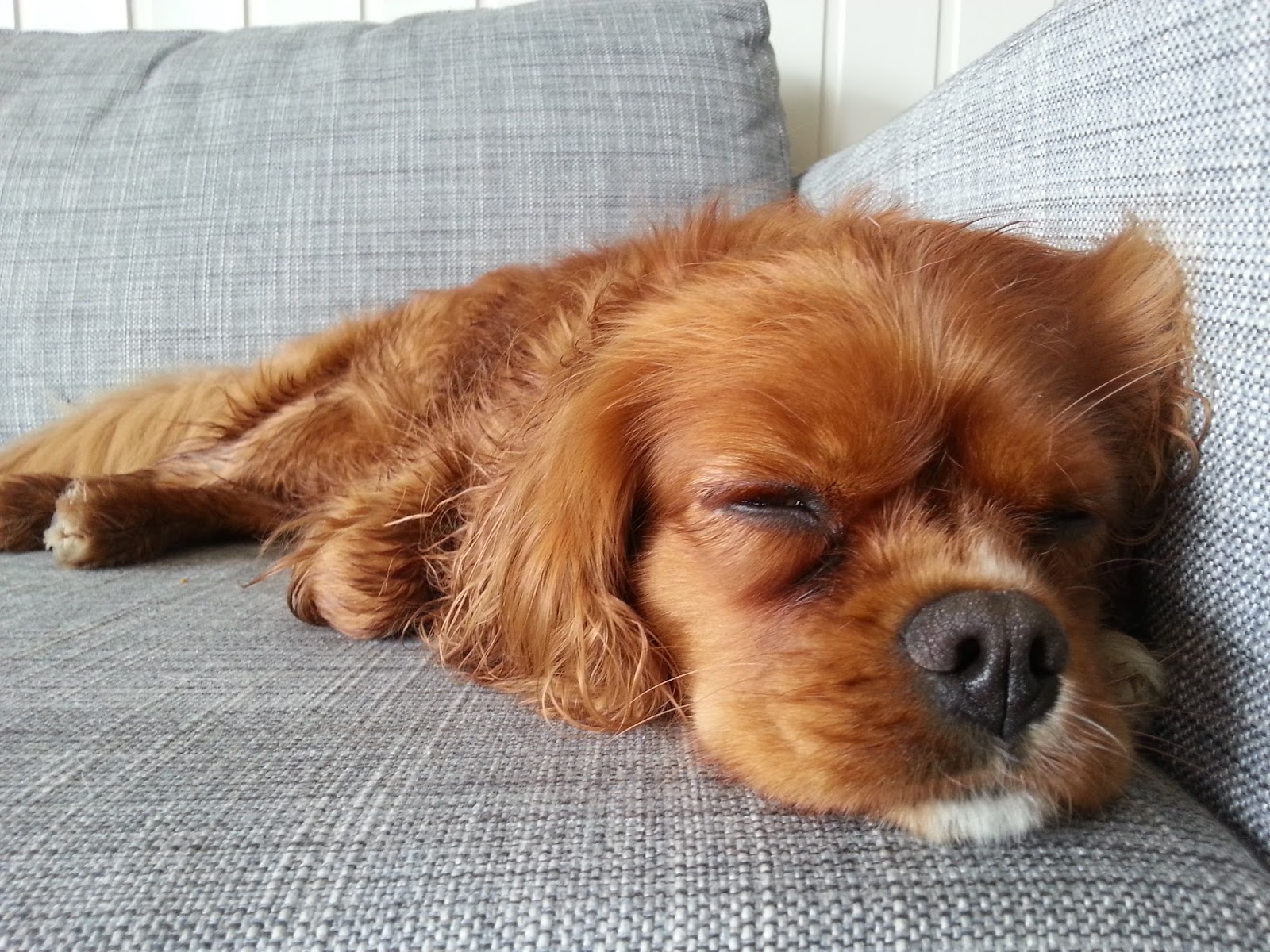

Sara is a Ruby Cavalier.
If a happy-go-lucky companion is what you are after, the Cavalier might just be the dog for you. Though the dog is no longer primarily associated with royalty, proper medical care could prove a costly affair for the average person. I therefore strongly recommend a well researched and sturdy insurance scheme, as well as an ample fund for regular and professional dental care unless you are qualified and committed to provide this yourself. Substantial costs are associated with the medicinal management of heart and neurological conditions. Treatments will be worth every penny, just make sure you can afford them before getting your Cavalier, and be aware that the conditions are very likely to arise. You'll never have a friend as true as the Cavalier, make sure you can reciprocate the dedication and care you'll receive.

PS: If I seem negative towards the breed, it is solely out of concern for the fate of the individual dogs' well-being. Cavaliers make us want to take care of them and love them, but that may also cause potential dog owners to get one before having thought it through. Cavaliers demand special care, and getting one without knowing both what concerns there are, and how well equipped you are to serve their needs, is a rash decision, which may lead to unnecessary suffering for the dog.

Tuesday, April 22, 2014

Separation Anxiety - Prevention and Treatment

 According to a pilot study as many as 85% of dogs experience stress when being left by their owner at home. For more on this see my post about this study: Separation Anxiety - More common than you think

 When it comes to problems that owners have with dogs, issues when the dog is left alone is one of the toughest. How are you going to train the dog to do the right thing, when you aren't even there when the problem occurs? Many of the problematic behaviors that dogs have when being left alone are simply signs of boredom. If the dog chews on shoes while you are gone, make sure that all shoes are out of reach and leave the dog with toys and something edible to chew on.  Also always make sure that the dog has been allowed to toilet properly before you leave, and make sure that you've house trained your dog. If not, you can't really complain if the dog urinate or defecate while you're gone. Whatever you do NEVER punish your dog if you come home to pools of urine or a chewed up couch. First of all it won't prevent it from happening again, and second of all it is a perfect way of creating separation anxiety in your dog. i.e. the dog will know that when you leave, you will come back and be scary.

Getting another dog to keep your first dog company is not a good idea unless you are 100% certain that your dog is the kind of  dog that feels safe as long as it has any company, dog or human. If this isn't the case, you might end up having two anxious dogs rather than one.

 So how do you prevent your dog from becoming one of the 85%? Or how do you train a dog that already has separation anxiety?

 The way to train a dog that already has separation issues and the way to teach a puppy to accept being alone is very similar. Here's one way of doing it:
Start by introducing a new bed to the dog. Every time the dog lies on this bed it will get a treat, preferably one that takes long to eat. Examples of such treats are chewing bones, dried pig's ears or a Kong filled with frozen canned dog food. The point is that the dog will stay on the bed for a relatively long period of time, happily chewing on the treat.
In the beginning you sit next to the dog while it gets the treat, then you start moving away from the dog, one step at a time. If the dogs show signs of stress by you leaving (stopping chewing, getting up etc.), you are moving to fast. Increase the distance between you and the dog gradually until you can walk out of the room entirely.
The rate of progression should always be determined by how the dog responds to the training. Never rush the training, as it is likely to give poorer results and might even set the dog back. If the calming effect of seeing and being on the bed is lost by putting the dog in a stressful situation while being on the bed, you will have to start all over again.
When you have been able to leave the room for a period of time, start simulation preparing to leave. Put on your jacket, get the car key, and then put it back and get the jacket of. Open the front door, close it. And so on and so forth. Until you can do all of these things, without the dog getting up from the bed and away from the treat.
Then for the final step: After having done all of the preparations for leaving, step outside, lock the door, and then unlock and go back in again. If your dog still lies on the bed, chewing it's treat, you are done with the "leaving" training. Now you can start leaving your dog for short periods of time, start with 1minute, then 5, then 10 etc. Vary the time you are gone, sometimes reduce the time you leave, don't always increase.

My dog Link, learning to settle on his bed.

 According to Patricia B. McConnell, Ph.D., author of The other end of the leash, most cases of separation anxiety can be treated in 6-8 weeks. For more serious cases, it can take as much as a year and require additional medication.
If your dog has separation anxiety, or if you just want to prevent it, I strongly recommend Patricia B. McConnell's booklet I'll be home soon


Saturday, April 12, 2014

10 Essentials for Easter Vacation with your Dog

Easter is quickly approaching, and here in Norway where I live, that equals long skiing trips and a lot of time spent outdoors. It also means that we go away from home, to relatives living far up north or to a cottage in the mountains. And of course we bring our canine companions with us, so here comes a list of the 10 most essential things you will need for your Easter vacation (or skiing trip) with your dog:

1. Harness and elastic leash


Link in his Non-Stop dogwear harness.
 Many people want's their dog to pull them when they go skiing with the dog. This is called skijoring and is really fun, at least as long as you have taught your dog some basic obedience and commands like "stop", "slower", "right", "left" and "go". Just imagine how uncomfortable it must be for the dog to pull you wearing a collar or a harness not made for pulling. Make sure you have the right equipment, and the ski trip will be fun for both you and your dog.

2. Socks and Paw cream

Link wearing socks before a walk.
 To avoid sore paws and snow and ice sticking to your dog's paws, always use a paw cream when you are outdoors with your dogs for any longer periods of time. This will make sure your dog doesn't get sore feet and that dirt and ice won't get stuck between the pads causing discomfort for the dog.
To protect your dog's paws even more, or if you see that the paws are a bit sore already, use socks. This will shield them from further wear and like the paw cream, keep the paws clean and free from ice. There are several kinds dog socks on the market. Just make sure that the socks you use don't have seems on the inside, as it may cause chafing on your dog's paws. Also make sure that the sock isn't to tight. You don't want to restrict blood flow to your dog's paws! Always check your dog's paws regularly when it has socks on to make sure they aren't doing more harm than good.'

4. Eye drops

This is a sign that your dog has an eye infection. You can try using normal moisturizing eye drops, but if the problem persists you have to take the dog to the vet.
 Eye drops to prevent the dog's eyes from getting dry. When out all day in the snow, with possible cold wind and bright light, your dog's eyes can become dry and irritated. This can lead to infections and inflammation of the eye. Just use normal moisturizing eye drops that you find at the pharmacy. If in doubt about if a certain type can be used on your dog, ask your veterinarian.

5. Bandage material

Link's front paws had to be bandaged after he had been out playing in icy snow at the cottage. Two of his claws were worn down so much they were bleeding.
 If your dog gets hurt during your vacation, you might well find yourself far away from the nearest veterinarian. At this point you will just have to make do with what you have, and if you have prepared and brought some bandage material you can help your dog right away. Now, I'm not saying that you don't have to go to the vet if your dog gets hurt, of course you do. But until you get there your dog will not be able to lick or bite at the wound or get dirt in it, if you've put a bandage on.

6. High energy snacks

You should never just go from no or little activity, to a lot of activity with anyone, dog or human. So make sure that if you are going skijoring with your dog that the dog is in shape to do it. If you are in doubt if your dog is healthy enough, get it checked by the vet. That being said, you will very likely be a lot more active with your dog during Easter than you have been for a while. That means that the dog is going to need some extra energy. Always bring some high energy snacks with you. There are ready made snacks that you can buy or you can just make some yourself. Also if your dog does not eat snow, make sure you offer it water to drink.

7. Food for dogs with sensitive stomachs


 All the time spent outdoors with your dog is going to give the dog plenty of opportunities to eat stuff that it finds (and most likely shouldn't eat). This means that your dog might get an upset stomach. The increased activity can have much the same effect. And again you might find yourself far away from the nearest veterinarian or even food store. While you can boil rice and skinless chicken breasts and feed to your dog in small portions, I find it much easier to use some of the pre-prepared diets that you find at the vet. I for my sake never go on trips with my dog without bringing some cans of i/d from Hill's .

8. Probiotics


 I swear to probiotics. Whether you are changing your dog's diet, the dog is on antibiotics or your dog just has a sensitive stomach, probiotics always help. I use something called Zoolac, that contains "good" bacteria and "food" for them, which balances the intestinal bacterial flora. It basically cannot be overdosed, since all that will happen if you give the dog much more than it needs, is that it will have even more of the "good" bacteria. I'm not sure Zoolac is sold anywhere else than in northern Europe, but I'm sure that your local veterinarian has a similar product. 


9. Clothing - coverall for the longhaired dog. Warming jackets for shorthaired dogs.


My boyfriend's sister's dachshund wearing a winter jacket last Easter.
 If you have a long haired dog (and live somewhere where there is a lot of snow), you have probably experienced your dog being almost covered in big snow balls. This is not pleasant for the dog and can be prevented if you use a water repellant coverall on your dog. If you on the other hand have a short haired dog, it is likely to get cold when out in the snow, even if the sun has really started warming now. For shorthaired dogs I would recommend a warming jacket or coat.

10. Sunglasses


 To protect the eyes of your dog you might want to consider using sunglasses on your dog. The suns rays are as damaging to the dog's eyes as they are to yours. There are a number of different products on the market when it comes to protecting your dog's eye. Everything from stylish sunglasses to mesh goggles.
Saturday, March 15, 2014

Elbow Dysplasia in my Golden Retriever - Rehabilitation after surgery

This is the second post of three about my experience of having a dog with elbow dysplasia. Here is a link to the first post:
Elbow Dysplasia in my Golden Retiever - Diagnosis and Treatment


The first weeks

The first couple of weeks after the surgery, Link was only allowed out for 5-10 minute walks a couple of times a day. This was slowly increased to about 15 minutes 3 times a day the following two weeks. During this period I also did some flexing and extending exercises with Link every day and I also massaged him.

Before flexing the joint, it had to be warmed up. The first couple of weeks after the surgery this was done with a warmed rice bag held around the elbow.
 Having had pain in his right elbow for what was probably several months before the surgery, the muscles around the joint were very tense, and you could definitely feel a difference between his right and left side.

Rehabilitation Plan

About 4 weeks after the surgery a colleague of mine at the veterinary clinic made a rehabilitation plan for Link for the following 6 weeks. The plan included how many minutes we could add to the walks per week and also some exercises and massage instructions. The plan was that after these 6 weeks the joint should be fine, Link should no longer limp and we should be able to start training him to walk as much as a normal healthy dog.

Link on one of the 5 minutes walks during the first week after surgery. Luckily we lived with my mother in Sweden this week so we could walk directly from the house into the forest behind it.
 One of the exercises in the rehabilitation plan was walking over a series of cavaletti. Originally cavaletti are small jumps, made of wood, used for basic horse training. Cavaletti is an exercise that gives the dog obstacles to walk over. This exercise makes the dog focus on where each foot is being placed and builds coordination.

The cavaletti I used for training Link can also be used as jumps in agility (or obedience). I doubt Link will ever start training agility properly, but I figured that I can at least teach him some agility just for fun, when and if his elbow ever gets good enough.

Link walking over the cavaletti.
 In Link's case, this exercise was also for making him bend his elbow while walking, to increase the mobility of the joint and strengthen the muscles around. In a sense he had to learn how to walk properly again. Below is a video of Link walking over the cavaletti.


We increased the duration of our walks by about 5-10 minutes per week, starting at 15 minutes the first week. So after 6 weeks we were walking about 45 minutes during one on the walks and had in addition two shorter walks a day. Not having gone for proper walks in months, Link had a lot of pent up energy. It wasn't until we passed 30 minutes per walk that I started seeing a change in him. At that point he had started to be able to relax better indoors again. Of course I had trained Link indoors, so he had really gotten to work with his brain, but he never really got physically tired from that. It felt like a blessing when we could walk him properly again. 
The new stretching exercises of the muscles surrounding the elbow, that we started with from week 1 of the rehabilitation plan, gave results pretty quickly. So it was only the first 1-2 weeks that we did that every day, after that we only did it a couple of times per week.
When it comes to the massage, Link really didn't have the patience to lie down for long massage sessions. So I only massaged him one leg at a time. I didn't only massage the bad leg since he had been putting more strain on the healthy legs all along, and therefor the other legs also needed some extra care.

Nutrition

One other thing after the surgery was the nutritional needs of a dog with joint problems. Link was recommended by the vet to start taking glucosamine supplements to prevent the development of osteoarthritis in the damaged joint. In addition to the supplement I also started feeding Link a dog food specifically made for dogs with joint problems. Since they only had Hill's at the clinic where my mother lives, I first gave him Hill's Prescription diet J/D Canine mobility, and the supplement Glycoflex from Aptus. When we came home from Sweden, I changed this to a mix of Royal canins Mobility Large Breed and Specific's CJD Joint support.


Glycoflex to the left (glucosamine supplement), and the tree dog foods made for dogs with joint problems.

End result

So what was the end result after 6 weeks? Well, Link still limped a bit at the start of the walks, because of stiff muscles. The joint was fine however, I was allowed to flex it (as long as the muscles around were relaxed) and Link showed no signs of pain in the joint. So all in all a great success!
I continues to increase the length of our walks for another couple of weeks and now (almost 3 months after the surgery) we walk for up to 1.5 hours at a time and we have started jogging once a week.
Link will need to keep eating dog food for dogs with joint problems and still gets glycoflex daily. I believe he will have to eat that for the rest of his life.

Sunday, March 2, 2014

Weekend at the Cottage

 I've spent the weekend at the cottage with my boyfriend, his parents and our dogs. It has been a fantastic weekend!

Beautiful Link!
Mads, Link and I got there already on Thursday evening, since both Mads and I had the Friday off. We got there late in the evening, so we didn't do much that night. But it felt so good to wake up at the cottage the next morning, so it was worth driving there in the dark.

Mads' parents Danish Swedish Farmdog named Scott.
 Mads, Link and I went out for a walk and some light jogging (to get Link used to pulling when wearing a harness) at lunch the next day, before Mads' parents and their Danish Swedish Farmdog named Scott, came to the cottage. We jogged on the road by the lake, and after a few kilometers we went out on the ice on the lake and walked back to the cottage. It felt almost like spring in the air! The sun was shining and there was hardly any wind.

Link pulling! At least a little...
Link and some "ice sculptures" by the road.
Link making "doggy snow angels" on the lake ice.

 The Saturday was spent mostly outside. The roof of the cottage was heavy with snow and ice, so we had to remove that. Well, I shouldn't say "we", it was mostly Mads and his mom that did the work. Link worked hard too, carrying around big blocks of ice and digging in the snow. But I'm not sure it helped getting the roof cleared...


Mads, his mother Merete and Link working
 Me and Link also went out jogging a little that day. He is really getting the hang of it now, but I could tell he was a bit tired from all the digging and playing. That didn't stop him from resuming this when we got back to the cottage.
 
Link and Scott playing after Link and I went jogging.
Scott.
 The only bad thing about this weekend was that I cut Link's claws right before we went to the cottage. This meant that as he spent most of the Friday and the whole Saturday outside playing and on walks, he wore down the claws too much. When I checked his feet on Saturday evening, he had worn down all the claws to the quick and was bleeding from some of them on his front paws! He had not shown any signs of pain during the day, so I hadn't checked earlier. Poor Link!

Link with bandages on his front paws. He clearly thought I was crazy when I put them on.
So note to self: never cut Link's claws before a weekend at the cottage! I gave him some painkillers (Prescribed by the vet for Link after the surgery, not the same kind we humans use! Human painkillers are often poisonous to dogs!) and only allowed him out when "nature called" on Saturday evening.  On Sunday morning he wanted to go outside again, and he can be very persuasive, so I put some light bandage on his front paws and let him go outside. It worked for almost 1.5 hours, then he managed to get one of them off. I tried to have him stay inside the cottage after that, but he just wanted to go outside all the time. So we decided to head home earlier than planned. It wasn't any fun to be at the cottage when we couldn't be outside with Link.

 Link outside with bandages on.